
The Fourth Trimester: What New Families Actually Need (And How Nourishment Is at the Center of It All)
By Emma Devin (they/them), Full-Spectrum Doula + Co-Founder, Brood
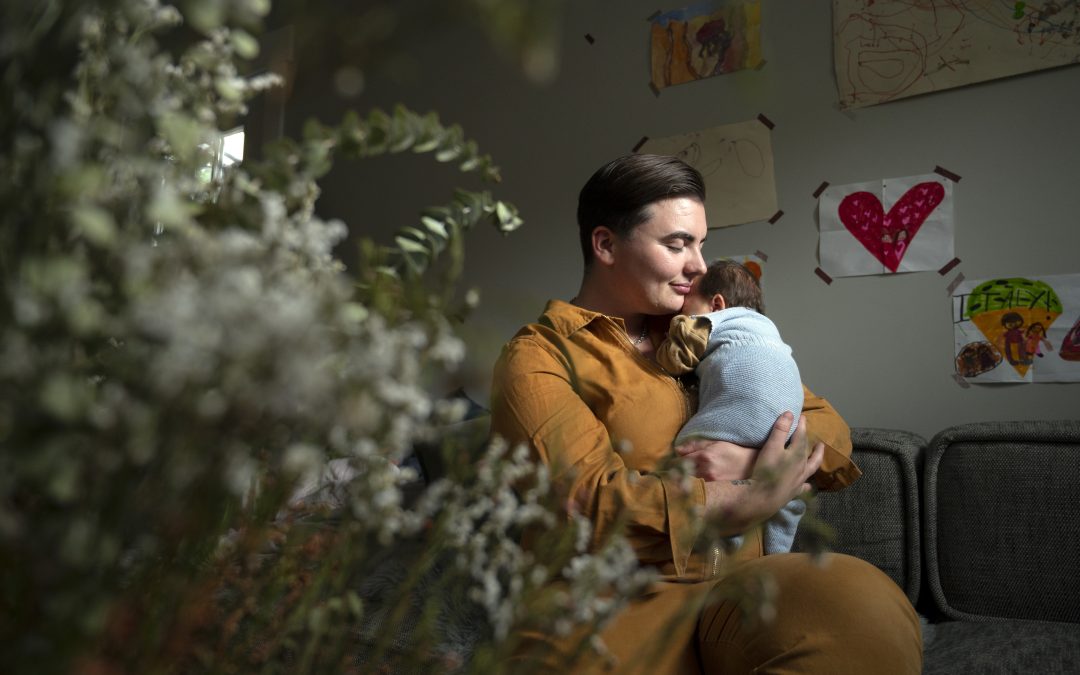
I have sat with a lot of families in those first raw weeks after a baby arrives. I have held newborns while their parents finally ate a hot meal. I have watched exhausted, beautiful people try to hold it all together while running on coffee, granola bars, and sheer love.
And I will tell you the thing I notice most: when a family is well-fed, everything else gets a little easier.
That is not an oversimplification. It is what I have seen, over and over — in over 500 births, and in more living rooms across Vancouver and beyond than I can count.
The fourth trimester — those first 12 weeks after birth — is one of the most intense and underestimated transitions a human being can go through. Your body is healing. Your identity is shifting. Your sleep is completely disrupted. And yet, somehow, you are also expected to feed and care for a brand new person around the clock.
This is where real, practical support makes all the difference. And one of the most meaningful forms of support? Making sure the people doing the caregiving are actually nourished.
What Is the Fourth Trimester, Really?
The term “fourth trimester” refers to the first three months after birth — a period that is finally getting the attention it deserves, though still not nearly enough of it.
For the birthing parent, this time involves significant physical recovery. Whether you gave birth vaginally or by cesarean, your body has been through something enormous. Hormones are recalibrating dramatically. Your uterus is contracting back to its pre-pregnancy size. If you are chestfeeding, your body is working hard to produce milk — which requires hundreds of additional calories per day. Tissues are healing. Iron stores may be depleted. Sleep deprivation is affecting everything from mood to immune function.
For non-birthing partners and co-parents, the fourth trimester brings its own challenges: learning to support a recovering partner, bonding with a newborn, managing household logistics, and often returning to work far sooner than anyone feels ready for.
For the whole family unit, it is a period of profound adjustment — beautiful, disorienting, joyful, and exhausting, often all at once.
What most families do not expect is how much the basics matter during this time. Sleep when you can, yes — but also: eat. Drink water. Let people help. And do not underestimate how much a nourishing meal can do for a depleted body and an overwhelmed mind.
What Does a Postpartum Doula Actually Do?
I get this question a lot, so let me break it down simply.
A postpartum doula is a trained support person who comes into your home during the early weeks — and sometimes months — after baby arrives. We are not medical providers. We work alongside your midwife, OB, or family doctor, and we fill a gap that medical care often cannot: the practical, emotional, and educational support that makes the day-to-day feel manageable.
In a typical shift, I might help a birthing parent get comfortable for a feeding while they finally eat breakfast, do a load of laundry so the family can rest, walk a partner through what is developmentally normal for their newborn, sit with someone while they cry because they did not expect it to feel like this, prepare a simple nourishing snack so someone has energy for the night ahead, or offer evidence-informed information on infant sleep, feeding, or recovery.
What I do not do is judge. Families come in every configuration — two moms, a single parent by choice, a blended family, a couple navigating enormous cultural pressures, 2SLGBTQIA+ families building the parenthood they imagined — and my job is to meet each family exactly where they are. The goal is not to take over. It is to make space for the family to find their footing.
And the research backs this up. A landmark Cochrane systematic review of data from over 15,000 people found that continuous doula support was associated with a 25% reduction in cesarean births, shorter labours, reduced need for pain medication, and significantly higher satisfaction with the birth experience. For a reader-friendly breakdown of that evidence, Evidence Based Birth has an excellent summary at evidencebasedbirth.com/the-evidence-for-doulas/
Why Food Is Not an Afterthought
Here is something I wish more families knew before the baby arrives: the postpartum period has profound nutritional demands, and most of us are wildly underprepared for that.
For chestfeeding parents, caloric needs increase by approximately 400–500 calories per day. Iron-rich foods become especially important, since blood loss during birth can leave people depleted. Protein supports tissue repair. Healthy fats — omega-3s in particular — support mood regulation and brain function at a time when perinatal mood disorders are a very real risk.
Research published in the Journal of Affective Disorders found that lower omega-3 (DHA) levels in mothers’ milk were associated with significantly higher rates of postpartum depression across countries — a finding that points directly to the importance of what new families are eating in those early weeks.
But here is the thing: nobody who is waking up every two hours to feed a newborn has the bandwidth to think about balanced macros. Nobody who is navigating stitches or a cesarean incision feels like standing at a stove. And most well-meaning people who offer to “help” do not always know what kind of help is actually useful.
This is why postpartum meal support — whether it comes from a partner with a great casserole, a meal train organized by friends, or a professional service like Fresh In Your Fridge that takes the entire question off your plate — is one of the highest-leverage forms of care a new family can receive.
When I walk into a home and the fridge is stocked with real food that someone else prepared, the atmosphere is different. The family has more capacity. The birthing parent is not rationing energy between eating and everything else. There is a small but meaningful exhale.
Warm, nourishing, easy-to-eat food, the kind that can be eaten one-handed, is genuinely one of the most loving things you can offer a postpartum family.
The Meals That Actually Help
In my experience, the most useful postpartum food is not fancy. It is warm, easy to eat, protein-forward, and hydrating — and most importantly, it is prepared by someone else.
Many traditional postpartum practices across cultures emphasize warm, cooked foods in the weeks after birth. From Ayurvedic traditions to Chinese zuo yuezi (“sitting the month”) to Latin American cuarentena, the wisdom is consistent: warmth supports digestion, and digestion is already working hard post-birth. Warm food is also simply comforting, and comfort matters enormously right now.
One-handed eating is not a small thing. Soups, stews, rice dishes, soft proteins, energy bites — if someone needs two hands and a knife and fork while holding a baby, there is a real chance they will not eat it. Think practical.
Protein-forward meals support both recovery and milk production. Eggs, legumes, quality meats, and dairy (if tolerated) are workhorses in this season. Broths and soups pull double duty on hydration. Chestfeeding parents need significantly more fluid, and it is easy to forget to drink water when you are focused entirely on someone else.
And the part that matters most: meals prepared by someone else remove a decision from people who are already at capacity. What to make. Whether there are ingredients. Whether there is energy to cook. Eliminating that question is a genuine act of care.
If you are in Vancouver and looking for a service that genuinely understands postpartum nutritional needs, Fresh in Your Fridge offers personalized meal prep with postpartum and maternity support as a specialty. Their team of nutritionists and chefs, led by founder Erika Weissenborn, B.Sc. FNH, CNP, can customize meals to dietary needs, sensitivities, and recovery goals, which means one less thing for a new family to figure out.
What Families Wish They Had Known
After supporting hundreds of families through the fourth trimester, a few themes come up again and again in those “I wish I had known” conversations.
Most people wish they had accepted more help. There is a culture of self-sufficiency that runs deep, especially in North America, and it makes it genuinely hard to let people in. But postpartum is not the time to go it alone. The villages that humans evolved in were not a metaphor. Community care is what this season asks for.
Most people wish they had set up support before the baby arrived. Meal trains, postpartum doula support, help with older children — all of this is so much easier to organize in advance. Once the baby is here, there is very little bandwidth for logistics.
Most people wish someone had told them that struggling does not mean failing. The fourth trimester is hard for almost everyone. It does not mean you are doing it wrong. It means you are human, doing something enormous, on very little sleep.
And almost universally, people wish they had taken their own nourishment seriously. It can feel selfish to prioritize eating when there is a newborn who needs you. But nourishing yourself is how you show up for your baby. It is not separate from caregiving, it is part of it.
How to Build a Postpartum Support Plan
If you are expecting, or supporting someone who is, here is what is worth putting in place before the baby arrives.
Line up your people. A postpartum doula, a trusted friend who can come regularly, a family member with practical skills. Identify who your people are, and do not be shy about asking for specific help. “Can you come on Tuesdays and bring dinner?” is a complete sentence.
Organize a meal train or meal prep service. Coordinate with friends, or use a professional service like Fresh in Your Fridge. Make sure whoever is contributing knows about dietary restrictions and what formats actually work — easy to reheat, easy to eat one-handed, enough for leftovers.
Stock your pantry in advance. Oats, lentils, canned fish, nut butters, frozen vegetables, good broth. The building blocks of easy, nourishing meals that require minimal effort when you have minimal energy.
Lower the bar on everything else. The dishes, the laundry, the thank-you notes, the state of the living room — none of it matters as much as rest and nourishment right now. Give yourself permission to let things be good enough.
Know where to find help. Your midwife or OB is your first call for medical concerns. For emotional support, feeding questions, and the day-to-day navigation of new parenthood, Brood’s team of postpartum doulas is here. You do not have to know exactly what you need before reaching out — that is what we are here to help figure out.
A Note on What Support Actually Looks Like
Support in the fourth trimester is rarely dramatic. It looks like someone washing the bottles without being asked. It looks like a meal showing up at 5pm so nobody has to think about dinner. It looks like a doula sitting across the table while you eat, making sure you actually finish your food before the baby wakes up again.
It looks like being seen in one of the most vulnerable and transformative seasons of your life.
That is what we do at Brood. And it is why I am grateful for partners like Fresh in Your Fridge, who understand that caring for new families means caring for the whole picture — including what is on their plate.
The fourth trimester is hard. But it does not have to be lonely, depleted, or unsupported. Let’s help you build the support you need.
––
Sources
- Hodnett ED, et al. Continuous support for women during childbirth. Cochrane Database of Systematic Reviews, 2013. cochranelibrary.com/cdsr/doi/10.1002/14651858.CD000012.pub5/full
- Hibbeln JR. Seafood consumption, the DHA content of mothers’ milk and prevalence rates of postpartum depression. Journal of Affective Disorders, 2002. sciencedirect.com/science/article/abs/pii/S0165032701003780
- Evidence Based Birth. The Evidence on Doulas. evidencebasedbirth.com/the-evidence-for-doulas/
—
About the Author
Emma Devin (they/them) is a full-spectrum doula with over 10 years of experience in care work and a co-founder of Brood Care Collective — Western Canada’s most trusted doula agency. Having been a part of more than 500 births, Emma specializes in support for 2SLGBTQIA+ families and in building doula agency structures that genuinely sustain care workers. Through Brood, they help shape the next generation of career doulas through mentorship, training, and meaningful business support. Outside of work, Emma is a parent of four (plus one very good dog) and can usually be found at the farmers market on weekends.
Learn more about Emma and the Brood team at broodcare.com